Visualsonics Vevo 2100/LAZR
Visualsonics Vevo 2100/LAZR (high-frequency ultrasound and photo-acoustic imaging)
Visualsonics Vevo 2100/LAZR (high-frequency ultrasound and photo-acoustic imaging)
The Vevo LAZR is a fully integrated high-frequency ultrasound and photoacoustic imaging system designed for small laboratory animals.
TRI’s Vevo LAZR was the first one installed in Australia (2015).
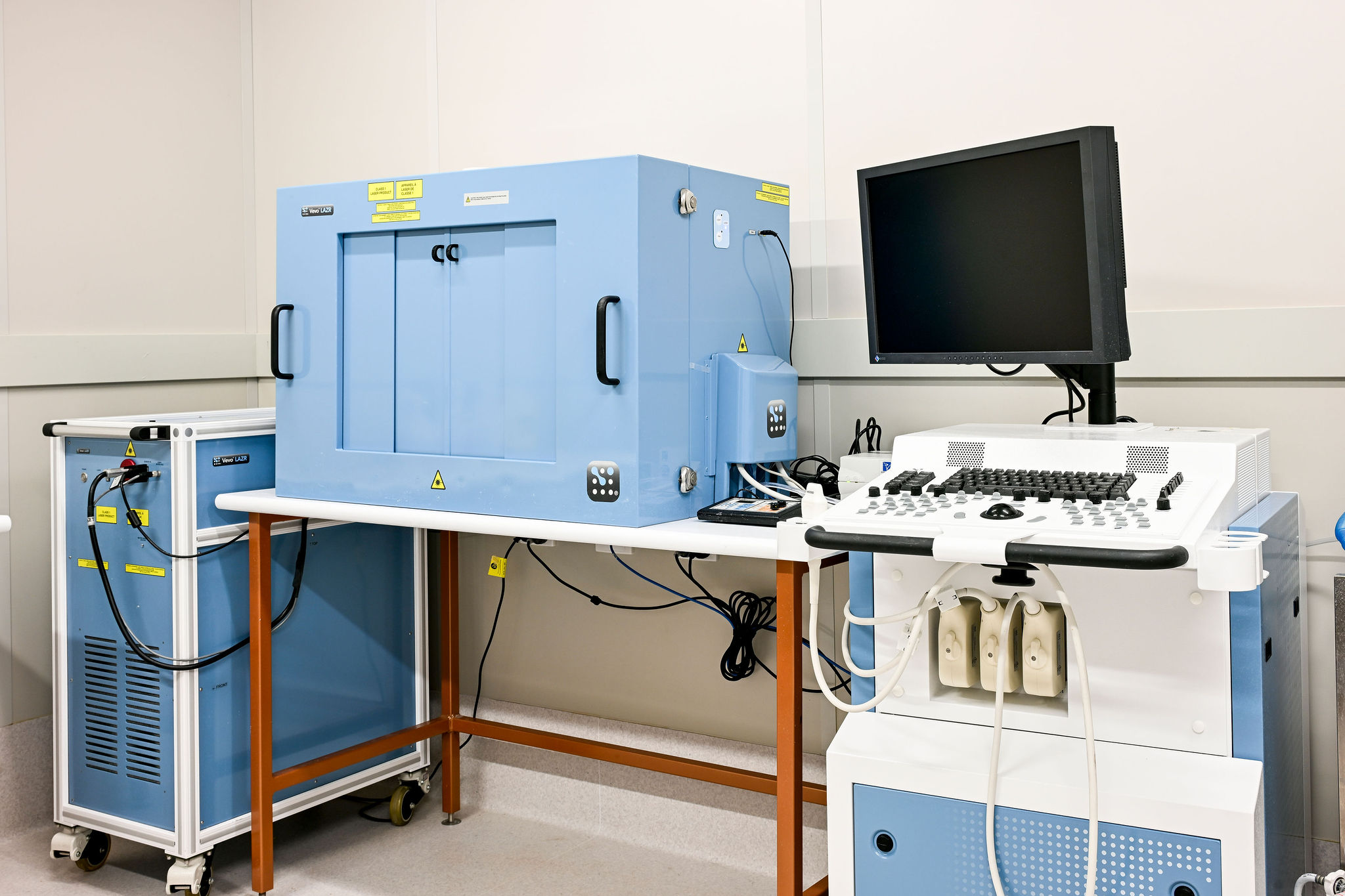
Photo-Acoustics
Photo-acoustics is a cutting-edge imaging modality which detects ultrasound waves generated by molecules of interest due to thermoelastic expansion following absorption of light (the “photoacoustic effect”). The instrument co-registers anatomical information (high-resolution ultrasound images) with functional data (eg oxygen saturation or nanoparticle distribution).
The photo-acoustic component is fitted with two transducers; LZ250 and LZ400. Applications include detection and quantification of endogenous contrast agents (oxygenated and deoxygenated haemoglobin, melanin), and exogenous contrast agents such nanoparticles (eg carbon, gold) and dyes (eg indocyanine green, and methylene blue).
Ultrasound
The ultrasound component (Vevo 2100) is fitted with two high-frequency transducers; MS550S and MS250S. Common high-frequency ultrasound applications include measurement of tissue volume, vascularity (power, colour, and pulsed-wave Doppler), perfusion (microbubble contrast agent), cardiac function, and image-guided injection.