Login
Contact

Explore

Explore

About
  • People and Partners
  • TRI Building
  • Reconciliation Action Plan
  • Strategic Plan
  • TRI Foundation
  • Careers
Research
  • Collaborate
  • Discovery
  • Translate
  • Engage
  • Research Areas
Clinical
  • Translational Trials
  • Clinical Research Facility
  • TRI at Children’s
Industry
  • TRI Incubator
  • The Precinct
  • Residents
Manufacture
  • New cGMP Facility
Facilities
  • Cleanroom
  • Flow Cytometry
  • Histology
  • Microscopy
  • Proteomics
  • Preclinical Imaging
  • Biological Research
  • Gnotobiotics
  • Human Immune Model
Get Involved
  • Health Consumers
  • SPARQ-ed
Resources
  • News
  • Events
  • Case Studies
  • Grants and Funding
  • Education and Training
+61 7 3443 7000info@tri.edu.au37 Kent Street, Woolloongabba QLD 4102 Australia

Acknowledgement of Country

TRI acknowledges the traditional custodians of the land we are on today, the Turrbal and Jagera people and we recognise their continuing connection to land, waters and community. We pay deep respect to them and their cultures; and to Elders past, present and emerging.

© Translational Research Institute Pty Ltd atf the Translational Research Institute Trust|ABN: 58 155 991 662
Privacy policy|Terms of Use|Contact Us
Back to equipment

Perkin Elmer IVIS Spectrum

High sensitivity imaging of samples in vivo, ex vivo and in vitro.

High sensitivity imaging of samples in vivo, ex vivo and in vitro.

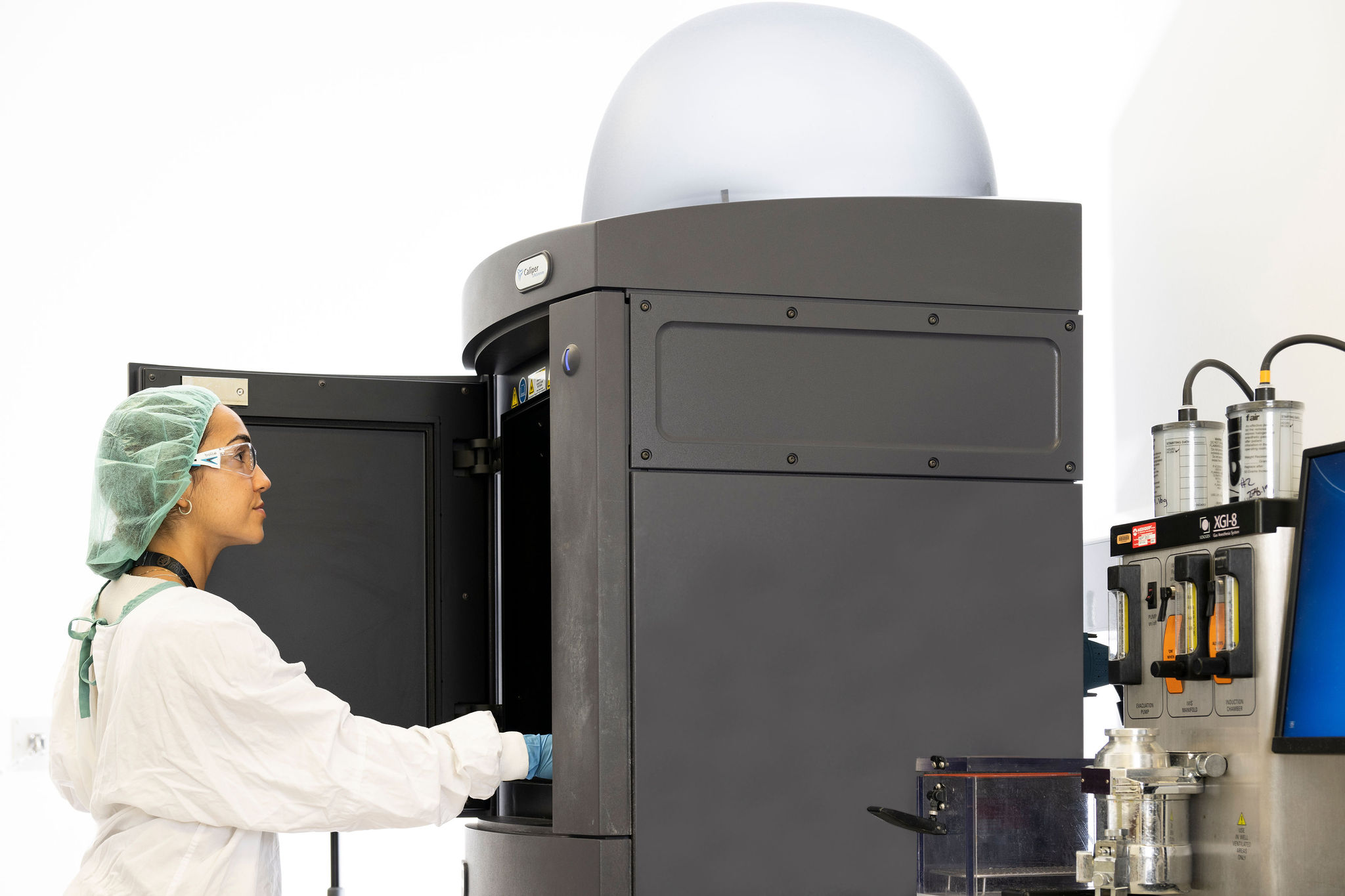
High sensitivity bio-luminescence, fluorescence and/or Cerenkov imaging of samples with an ultra-cooled CCD camera designed for optimal detection of low intensity light. The IVIS Spectrum allows for spectral scanning from blue to near-infrared (NIR) wavelengths by using 10 narrow band excitation filters (30nm bandwidth) and 18 narrow band emission filters (20nm bandwidth).

The spectral unmixing tool enables separation of multiple fluorescent reporters within the same sample. High throughput imaging (5 units) is possible with the 23cm FOV, and high resolution (20µm) with the 3.9cm FOV.
Features

Major applications of optical imaging include monitoring of disease progression (eg primary tumour growth and metastatic spread), tracking of adoptively transferred immune cells, and bio-distribution of fluorescently-labelled nanoparticles.

Need more help?

For more information on instruments, services and facility charges contact the Senior Preclinical Imaging Facility Scientist.