Login
Contact

Explore

Explore

About
  • People and Partners
  • TRI Building
  • Reconciliation Action Plan
  • Strategic Plan
  • TRI Foundation
  • Careers
Research
  • Collaborate
  • Discovery
  • Translate
  • Engage
  • Research Areas
Clinical
  • Translational Trials
  • Clinical Research Facility
  • TRI at Children’s
Industry
  • TRI Incubator
  • The Precinct
  • Residents
Manufacture
  • New cGMP Facility
Facilities
  • Cleanroom
  • Flow Cytometry
  • Histology
  • Microscopy
  • Proteomics
  • Preclinical Imaging
  • Biological Research
  • Gnotobiotics
  • Human Immune Model
Get Involved
  • Health Consumers
  • SPARQ-ed
Resources
  • News
  • Events
  • Case Studies
  • Grants and Funding
  • Education and Training
+61 7 3443 7000info@tri.edu.au37 Kent Street, Woolloongabba QLD 4102 Australia

Acknowledgement of Country

TRI acknowledges the traditional custodians of the land we are on today, the Turrbal and Jagera people and we recognise their continuing connection to land, waters and community. We pay deep respect to them and their cultures; and to Elders past, present and emerging.

© Translational Research Institute Pty Ltd atf the Translational Research Institute Trust|ABN: 58 155 991 662
Privacy policy|Terms of Use|Contact Us
Back to equipment

Molecubes

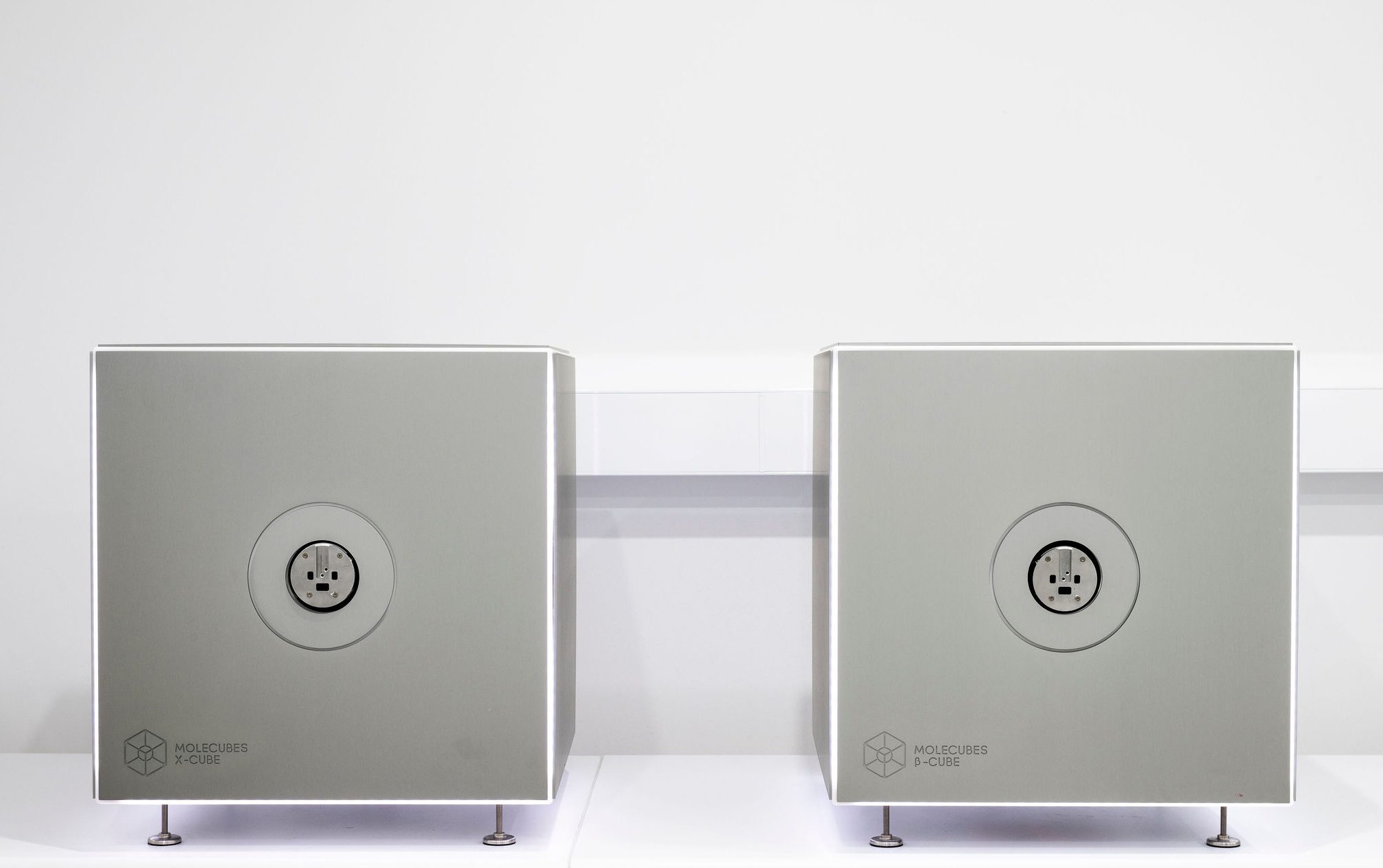
Molecubes β-Cube and X-Cube (µPET-CT)

Molecubes β-Cube and X-Cube (µPET-CT)

The benchtop Molecubes µPET-CT system co-registers sequentially acquired PET and CT data from anaesthetised small laboratory animals.

The PET system (β-Cube) provides sub-millimeter spatial resolution, with a maximal Field of View (FOV) of 130mm (axial) x 72mm (transaxial).
β-Cube Features

High-throughput imaging is achievable due to high detector sensitivity (short acquisition times), simultaneous imaging capability, and a user-friendly software graphical interface. Our facility is licensed to handle multiple PET radioisotopes including F18, Zr89, Ga68 and Cu64. Common PET-CT applications include glucose uptake, tumour-specific imaging, bio-distribution of newly developed radiotracers, and brain dopamine metabolism.

X-Cube Features

Utilises a variable X-ray source (20-80kV) enabling rapid whole animal imaging through a large FOV of 63mm (transaxial) x 200mm (axial). CT images are typically reconstructed at 50µm voxel size resolution. The novel respiration gating functionality minimises breathing artefacts, providing clear CT images. The X-Cube can be used independently, and common CT applications include longitudinal assessment of osteogenesis, calcification of biomaterials, osteoporosis, patient-derived explants (samples inside plates), and healing in bone defect models.

Need more help?

For more information on instruments, services and facility charges contact the Senior Preclinical Imaging Facility Scientist.